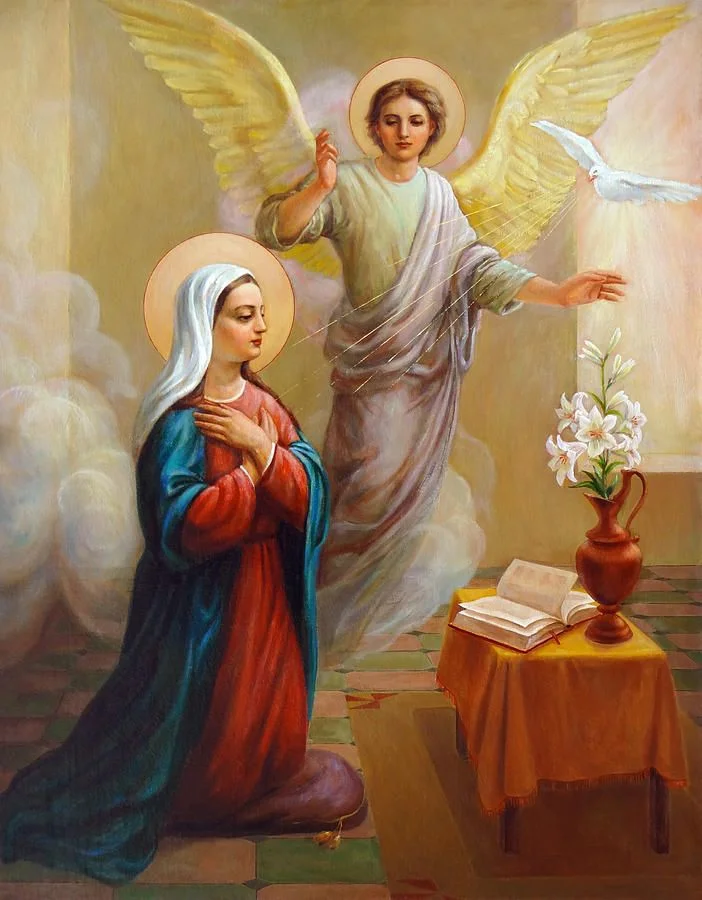
Mary, Our Queen and Mother
Updated at: 2023-08-05 13:19:22 (2 years ago by Melkisedeck Leon Shine)
🌹Mary, Our Queen and Mother🌹
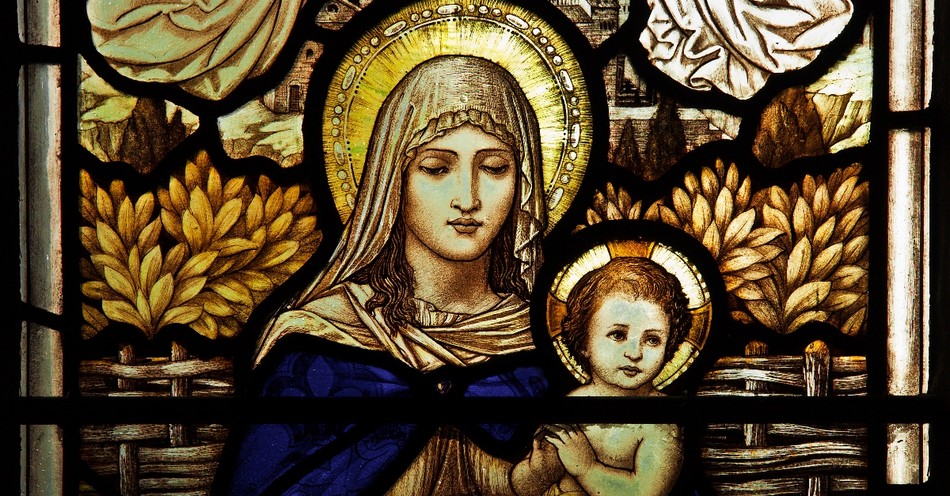
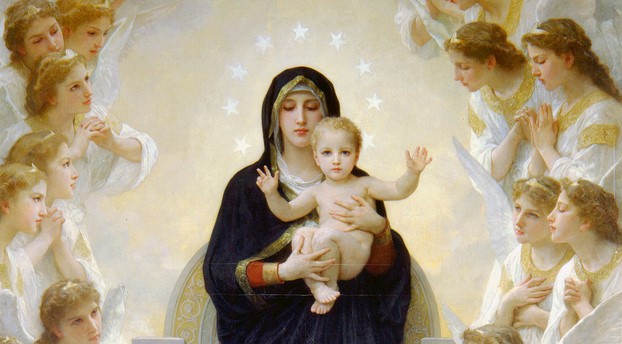
Mary, Our Queen and Mother, holds a special place in the hearts of Christians around the world. As a devout Catholic, I find great comfort and inspiration in contemplating the life of the Blessed Virgin Mary. 🙏
Throughout the Bible, we see how Mary's role as the Mother of God is highlighted. From the Annunciation (Luke 1:26-38) to the Visitation (Luke 1:39-56), she embraced her divine calling with humility and faith. 🌟
One of the most beautiful aspects of Mary's story is her perpetual virginity. In the Gospel of Matthew, it is clear that Joseph did not have marital relations with her until after Jesus' birth (Matthew 1:25). This affirms the belief that Mary remained a virgin throughout her life. 🌷
Some may question this teaching, but it is important to remember that the Bible is not the only source of truth for Catholic Christians. The Catechism of the Catholic Church, in paragraph 499, states, "The deepening of faith in the virginal motherhood led the Church to confess Mary's real and perpetual virginity even in the act of giving birth to the Son of God made man." 📖
Moreover, when Jesus was dying on the cross, He entrusted Mary to the care of the beloved disciple, John (John 19:26-27). This demonstrates the unique role Mary plays as the spiritual mother of all humanity. 🌍
In Catholic tradition, Mary is referred to as the "Queen of Heaven" and "Mother of the Church." This honor is not based solely on human devotion but is deeply rooted in scriptural imagery. In the book of Revelation, Mary is portrayed as a woman clothed with the sun, with the moon under her feet, and a crown of twelve stars on her head (Revelation 12:1). 🌟🌙👑
The lives of Catholic saints provide us with further insight into the significance of Mary's role as Queen and Mother. St. Louis de Montfort, a great Marian devotee, said, "Mary is the Queen of heaven and earth by grace as Jesus is the King by nature and by conquest." 🌹
St. Maximilian Kolbe, another esteemed saint, emphasized Mary's role in our spiritual lives. He stated, "Never be afraid of loving the Blessed Virgin too much. You can never love her more than Jesus did." 💖
Our love and devotion to Mary should never be a hindrance to our love for Jesus. On the contrary, Mary leads us closer to Jesus, just as she did at the wedding in Cana (John 2:1-12) when she told the servants, "Do whatever he tells you." Mary's guidance points us to her Son. 🍷🕊️
It is also important to recognize that our Catholic faith does not worship Mary but honors her as the most perfect disciple and the first among the redeemed. The Catechism of the Catholic Church states in paragraph 971, "The Church's devotion to the Blessed Virgin is intrinsic to Christian worship."
🌸 Mary's intercession has been a source of comfort and miracles for countless Catholics throughout history. Just as she interceded at the Wedding at Cana, she continues to intercede for us in heaven. 🌸
Through the rosary, Catholics meditate on the mysteries of the life of Jesus, guided by the prayers of Mary. This powerful devotion strengthens our spiritual connection to both Jesus and Mary. 📿
In moments of doubt or difficulty, turning to Mary can bring us solace and hope. She understands our sorrows and joys, as she witnessed the suffering and resurrection of her Son. 🙏
As we honor Mary, Our Queen and Mother, let us recognize her as a guiding light on our journey of faith. She reminds us of the beauty and power of embracing God's will, just like she did when she said, "Behold, I am the handmaid of the Lord; let it be to me according to your word" (Luke 1:38). 🌟
So, dear reader, what are your thoughts on Mary, Our Queen and Mother? How has her example influenced your spiritual journey? Feel free to share your insights and experiences. 🌹🌟🙏
Updated at: 2023-08-05 13:19:55 (2 years ago by Melkisedeck Leon Shine)
The Miraculous Stories of Marian Apparitions: A Divine Connection 🌟
The Virgin Mary, revered as the Mother of God, has been a figure of immense importance and devotion in the Christian faith. 🙏
Throughout history, numerous accounts of Marian apparitions have captivated the hearts and souls of believers, serving as a testament to the miraculous presence of the Blessed Mother. 🌹
One notable example of a Marian apparition can be found in the biblical story of the Annunciation, where the angel Gabriel appeared to Mary and proclaimed that she would conceive and give birth to Jesus. This divine encounter showcases the special relationship Mary had with God. 🕊️
In Luke 1:28, the angel Gabriel greets Mary with the words, "Hail, full of grace, the Lord is with you." This Scripture passage highlights Mary's unique role as the chosen vessel for the Incarnation. 🌟
The Catechism of the Catholic Church teaches that Mary's perpetual virginity is a sign of her total dedication to God and her complete submission to His will. This profound commitment sets her apart as a shining example of faith and purity. 🌹
Over the centuries, Marian apparitions have occurred in various parts of the world, spreading messages of love, peace, and hope. One such instance took place in 1531 in Mexico, when the Virgin Mary appeared to a humble Indigenous man named Juan Diego. She left an image of herself imprinted on his cloak, which is now known as Our Lady of Guadalupe. 🇲🇽
The story of Our Lady of Guadalupe is a powerful reminder of the maternal love and intercession of the Blessed Mother. Her message of unity and compassion continues to touch the hearts of millions around the globe. 🌎
Another notable Marian apparition occurred in 1858 in Lourdes, France. The Virgin Mary appeared to a young girl named Bernadette Soubirous and instructed her to dig a spring, which subsequently became known for its miraculous healing properties. This site has since become a place of pilgrimage for believers seeking spiritual and physical renewal. 💧
The messages conveyed during Marian apparitions often emphasize the importance of prayer, repentance, and conversion. These celestial encounters serve as a call to deepen our relationship with God and to live our lives in accordance with His teachings. 🙌
The devotion to the Blessed Mother is deeply ingrained in Catholic spirituality. Saints such as Saint Louis de Montfort and Saint Maximilian Kolbe have written extensively about the significance of Marian devotion, encouraging believers to entrust themselves entirely to Mary's maternal care. 🌹
The Catechism of the Catholic Church states, "Mary's role in the Church is inseparable from her union with Christ and flows directly from it" (CCC 964). This teaching affirms the unique role Mary plays as the Queen of Heaven and a powerful intercessor on behalf of humanity. 🌟
The stories of Marian apparitions remind us of the profound love that Mary, as the Mother of God, has for each one of us. Just as she cared for Jesus during His earthly life, she continues to watch over and guide us with her motherly tenderness. 💖
One of the most important aspects of the Marian apparitions is the reminder of the power of prayer. Mary often urges us to pray the rosary, a powerful spiritual weapon that brings us closer to God and helps us meditate on the life of Jesus. 📿
The apparitions of the Blessed Mother serve as a beacon of hope in a world often overshadowed by darkness and uncertainty. Through her loving presence, Mary reminds us that we are not alone and that she is always ready to intercede for us before the throne of God. 🌹
What are your thoughts on the miraculous stories of Marian apparitions? Do you believe in the power of Mary's intercession and her role in guiding and protecting us? Share your opinion and experiences below! 🌟🙏
Updated at: 2025-06-05 11:19:25 (1 year ago by Melkisedeck Leon Shine)
This article examines the multifaceted role of Mary, the Mother of Jesus, within the Catholic theological framework. We will explore key Marian dogmas and their implications, applying relevant theological principles and models to illuminate Mary's enduring significance for the Church and individual believers. Central concepts include the Immaculate Conception, the doctrine of mediation, and the theological understanding of motherhood within the context of salvation history.
1. The Immaculate Conception: A Foundation for Mary's Unique Vocation: The dogma of the Immaculate Conception posits that Mary was preserved from original sin from the first moment of her conception. This isn't merely a historical event; it's a theological statement about her unique preparation for her role as Theotokos, the God-bearer. This preemptive grace, according to the doctrine of prevenient grace, highlights Mary's complete receptivity to God's divine will, making her the ideal vessel for the Incarnation. Applying the concept of divine election, we see Mary as chosen, not for her inherent merit, but for God's sovereign plan of salvation. This unique status sets the stage for her subsequent roles within salvation history.
2. The Fiat of Mary: A Model of Humility and Obedience: Mary's "fiat," her "yes" to the angel Gabriel's annunciation (Luke 1:38), is a pivotal moment in Christian theology. This act of perfect obedience, understood through the lens of the virtue ethics, exemplifies the ultimate surrender of self to God's plan. Mary's willingness, not without apprehension (Luke 1:34), is not passive acquiescence but an active choice rooted in faith and trust. It provides a powerful example of the necessary response to God's call for all believers, highlighting the importance of humility and obedience in living out one's faith. This obedience becomes a model for the entire Church, demonstrating that salvation is fundamentally God’s initiative and that our response is a participation in God’s grace.
3. Mary, Mother of Jesus and Spiritual Mother of the Church: The title "Mother of God" (Theotokos) affirms Mary's central role in the Incarnation. Extending this role, the Catholic Church recognizes Mary as the spiritual Mother of the Church, a concept elaborated through the lens of ecclesiology. Jesus' entrustment of his mother to John, and implicitly to all believers, at the foot of the cross (John 19:26-27) exemplifies this. This spiritual motherhood isn't merely metaphorical; it reflects Mary's ongoing intercession and her role in guiding the Church towards Christ. This concept utilizes the maternal metaphor, not in a biological sense, but as a spiritual reality, emphasizing the nurturing and protective aspects of Mary's relationship to the Church and individual believers.
4. Mary's Intercessory Role: Mediation and the Economy of Salvation: The Catholic tradition holds that Mary acts as a mediatrix of grace. This doesn't diminish the role of Christ as the sole mediator between God and humanity but understands Mary's intercession within the broader economy of salvation. Her role is subordinate to Christ's; she presents our prayers to him, acting as an advocate, using the principles of sacramental theology, which involves the participation of earthly realities in the divine. The wedding at Cana (John 2:1-11) serves as an illustrative example of this intercessory power, showcasing her influence within the earthly events leading to the revelation of Jesus' divine nature.
5. The Assumption: The Glorification of Mary and Eschatological Hope: The dogma of the Assumption asserts that Mary was taken, body and soul, into heaven. The Assumption, understood within the framework of eschatology, signifies the ultimate triumph of grace and the promise of resurrection for all believers. It highlights Mary's complete union with her Son and prefigures the hope of the final resurrection and the beatific vision for the faithful. This dogma signifies Mary’s unique role in God’s plan and foreshadows the future of humanity – a participation in the divine life.
Conclusion and Recommendations: This exploration of Mary's role reveals her significance as a pivotal figure within Catholic theology and spirituality. Her life and actions, understood through various theological lenses, offer models of faith, obedience, and intercessory prayer. Further research could explore comparative analyses of Marian devotion across different Christian denominations, examining the variations in theological interpretations and their cultural expressions. The implications of Marian theology extend to contemporary pastoral practice, encouraging further study on its relevance in areas such as spiritual guidance and fostering devotion in the modern world. Understanding Mary's role can also enrich our understanding of God's grace and human participation in salvation, offering comfort and inspiration to believers seeking a deeper connection with God.
Reader Pool: What are the potential limitations of relying solely on the Marian paradigm in understanding the broader theological landscape of the Christian faith, and how can such limitations be addressed in a balanced approach to theological study?
Updated at: 2023-08-05 13:20:31 (2 years ago by Melkisedeck Leon Shine)
🌟Mary, Mother of God: Our Guide to Eternal Joy🌟
🌹 Introduction: The significance of Virgin Mary in Christian Catholicism cannot be overstated. Throughout history, she has been venerated as the Mother of God and the perfect model of faith and virtue. Let us explore how Mary, our beloved guide, can lead us to eternal joy.
🙏🏼 Mary's Immaculate Conception: Unlike any other human being, Mary was conceived without the stain of original sin, making her the perfect vessel for carrying and nurturing the Son of God. Her purity and holiness set her apart.
💕 Mary as the Mother of God: Mary's divine motherhood is a cornerstone of the Christian faith. The Bible clearly states in Luke 1:43, "And why is this granted me, that the mother of my Lord should come to me?" Mary's unique role as the Mother of Jesus emphasizes her closeness to God and her intercessory power.
🌟 Mary's Fiat: In Luke 1:38, Mary humbly accepts God's plan for her life, saying, "Behold, I am the handmaid of the Lord; let it be to me according to your word." Her complete surrender to God's will teaches us the importance of trust, obedience, and humility in our own lives.
🌹 Mary as Our Intercessor: Just as Mary interceded on behalf of the couple at the wedding in Cana, she continues to intercede for us before her Son, Jesus. The Catechism of the Catholic Church beautifully states in paragraph 2677, "By asking Mary to pray for us, we acknowledge ourselves to be poor sinners and we address ourselves to the 'Mother of Mercy', the All-Holy One."
🕊️ Mary's Role in Salvation: Mary's "yes" to God's plan brought salvation to the world. Through her cooperation, Jesus Christ, our Savior, was born. She is truly the Mother of our redemption, and her unwavering faith inspires us to draw closer to Christ.
🌈 A Life of Virtue: Mary's life was a shining example of holiness and virtue. She exhibited qualities such as purity, humility, compassion, and obedience. As we strive to live a Christ-centered life, we can turn to Mary as a guide in cultivating these virtues.
🌺 Mary and the Rosary: The Rosary is a powerful prayer that allows us to meditate on the life of Jesus through the eyes of Mary. By praying the Rosary, we deepen our relationship with Christ and draw closer to our Heavenly Mother.
⛪ Mary and the Church: Mary has a special place in the heart of the Church. She is the perfect model of discipleship and an example of faithfulness to God's mission. As we navigate our spiritual journey, we look to Mary as a guide and advocate.
💒 Marian Apparitions: Throughout history, Mary has appeared to various individuals, delivering messages of hope, repentance, and conversion. These apparitions serve as a reminder of Mary's maternal love for us and her desire to lead us to eternal joy.
🌟 Saints' Devotion to Mary: Numerous Catholic saints have expressed their deep devotion to Mary. St. Louis de Montfort, for example, wrote extensively about consecration to Mary and the benefits of entrusting oneself to her care.
🌹 Mary as Our Mother: Jesus, while on the cross, entrusted Mary to the care of the beloved disciple, saying, "Behold, your mother" (John 19:27). In that moment, Mary became our spiritual mother, guiding and nurturing us in our journey towards Heaven.
🙏🏼 The Prayers of Mary: Mary's prayers are powerful and efficacious. Just as she interceded for the wedding couple at Cana, she intercedes for us in our time of need. Let us turn to her with confidence, knowing that she will bring our petitions before her Son.
💖 Mary's Love for All: Mary's love extends to all of humanity, regardless of our shortcomings or sins. She invites us to approach her with childlike trust, knowing that she will lead us to her Son, who is the source of eternal joy.
🌟 Conclusion: Mary, Mother of God, is a guiding light in our journey towards eternal joy. Through her example, intercession, and love, she leads us closer to Jesus. Let us embrace her motherly care and seek her guidance as we strive to live a life pleasing to God.
🌹 What are your thoughts on the immense love and guidance that Mary, Mother of God, provides for us? How has she influenced your spiritual journey? Share your thoughts and experiences below! 🙏🏼
Updated at: 2025-07-03 10:40:59 (11 months ago by Melkisedeck Leon Shine)
Introduction: This discourse examines the theological significance and practical implications of devotion to the Immaculate Heart of Mary within the Catholic tradition. We will analyze key Marian dogmas, their historical context, and contemporary relevance, utilizing theological frameworks and examples from scripture and tradition to illustrate the depth and richness of this devotion. Key concepts, including the Immaculate Conception, Marian intercession, and the theological underpinnings of the Rosary, will be defined and analyzed within their respective historical and theological contexts. We will explore how these concepts manifest in practical application for believers today.
1. Mary's Unique Role in Salvation History (Catechism of the Catholic Church): The Catechism of the Catholic Church explicitly affirms Mary's unique and indispensable role in salvation history, emphasizing her active participation in God's salvific plan. Her roles as Theotokos (Mother of God) and "first disciple" underscore her exemplary faith and obedience, serving as a powerful model for Christian discipleship. This aligns with the ecclesiological principle of the communion of saints, highlighting the interconnectedness of all believers in Christ's redemptive work. The practical application here encourages emulation of Mary's steadfast faith and obedience, understanding her life as a model for navigating challenges and embracing God's will. This encourages active engagement in one’s own spiritual journey, striving for a deeper connection with God through commitment and faith.
2. The Immaculate Conception and the Purity of Heart: The dogma of the Immaculate Conception, declaring Mary's freedom from original sin from her conception, is fundamental to understanding her Immaculate Heart. Defined in 1854, this dogma establishes Mary as uniquely prepared to conceive and bear the Son of God. This purity is not merely the absence of sin, but a radical openness to God's grace, making her a paragon of faithful discipleship. Applying this, we see the importance of striving for interior purity – not a flawless state, but a constant pursuit of holiness through God's grace, reflected in actions aligned with God’s will. This process of sanctification, mirroring Mary's example, is a journey of transformation through active participation in the life of grace.
3. The Fiat of Mary and the Embrace of Divine Will: Mary's "Fiat," her unqualified "yes" to God's plan at the Annunciation (Luke 1:38), epitomizes complete surrender to the divine will. This act of profound faith serves as a paradigm for Christian living, urging acceptance of God's plan, even amidst uncertainty or suffering. This embodies the concept of *kenosis*, self-emptying, as described in Philippians 2:7. Practically, cultivating a spirit of obedience and trust involves seeking God's guidance in decisions, accepting challenges as opportunities for spiritual growth, and embracing a life centered on God's plan rather than one's own self-determined will.
4. Marian Intercession and the Role of Mediation: Catholic tradition highlights Mary's role as intercessor, mediating between humanity and God. This intercession doesn't circumvent Christ's unique mediatorship but reflects her profound union with Him. This aligns with the principle of the communion of saints, where believers intercede for each other. The wedding at Cana (John 2:1-11) illustrates this intercessory role. Practically, this means acknowledging Mary's role in presenting our needs to Christ, fostering a spirit of humble prayer, and trusting in her compassionate maternal care. This approach cultivates a deep sense of reliance on the power of communal prayer and the grace of divine intervention through Mary’s mediation.
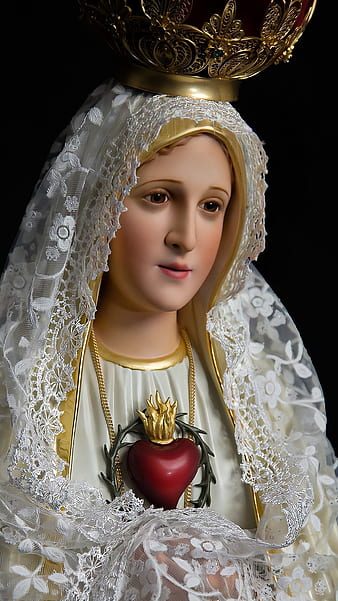
5. Symbolism of the Immaculate Heart and the Sorrowful Mother: The image of the Immaculate Heart, often shown pierced with thorns, symbolizes Mary's profound compassion and suffering alongside her Son. This powerful visual representation fosters empathy and understanding of suffering as an intrinsic part of the human condition and the Christian faith. Applying this symbolically encourages compassion, understanding the suffering of others, and recognizing that shared suffering fosters deeper spiritual connection and empathy within the communion of saints. The image simultaneously conveys both Mary's unwavering love and her profound sorrow, allowing believers to connect with her experience of intense joy and profound grief.
6. Marian Promises and the Abundance of Grace: The promises associated with devotion to the Immaculate Heart emphasize spiritual graces and protection offered to those who embrace this devotion. These promises, rooted in tradition and expressed through various Marian apparitions, invite us to seek God's abundant grace, facilitated through Mary's intercession. Practically, this encourages trust in God's providence and recognition of the abundance of grace available to those who actively seek it through prayer and faithful devotion to Mary. This understanding fosters a deeper relationship with God and the cultivation of a trustful and faithful spirit.
7. Fatima and the Call to Conversion: The 1917 Marian apparitions at Fatima emphasize the urgency of conversion, prayer, and devotion to her Immaculate Heart. The messages stress repentance and prayer as crucial in overcoming human challenges. Applying this message today requires critical self-examination, recognizing the need for personal and collective conversion, embracing prayer to foster peace and justice. This entails a commitment to living out the Gospel message in daily life and promoting social justice and peace. The messages from Fatima have a continued relevance in a world struggling with moral and social issues.
8. The Rosary and Contemplative Prayer: The Rosary, a traditional Marian devotion, provides a framework for contemplative prayer focusing on the mysteries of Christ's life. Rooted in *Lectio Divina*, it encourages reflection, deepening understanding of salvation history and fostering closeness with Christ and Mary. Applying this in a modern context emphasizes the importance of regular contemplative prayer for spiritual renewal and growth, enhancing connection with the divine. Regular, structured prayer, such as the Rosary, allows for increased focus and deeper reflection on the mysteries of faith.
9. The Example of the Saints and the Propagation of Devotion: The lives of saints demonstrating unwavering devotion to Mary, such as St. Maximilian Kolbe, showcase the transformative power of Marian devotion. Their dedication to spreading this devotion highlights its importance and ability to inspire holiness and charitable acts. Applying this reminds us of the significance of following Church teachings and imitating virtuous examples, illustrating the deep connection between Marian devotion and spiritual growth. This suggests the transformative power of devout lives and their impact on inspiring others towards holiness.
10. The Assumption and Coronation: The Culmination of Mary’s Role: The dogmas of the Assumption and Coronation affirm Mary's ultimate triumph over death and her reign as Queen of Heaven and Earth, underscoring her exalted position and perpetual intercession. Applying this reminds us of the ultimate victory of good over evil and hope for our eventual reunification with God. These doctrines highlight the ultimate victory of faith and the promise of salvation, strengthening one’s hope in the face of life's challenges.
Conclusions and Recommendations: Devotion to the Immaculate Heart of Mary, firmly grounded in Catholic doctrines and centuries of tradition, provides a path to spiritual growth and deeper communion with God. It emphasizes faith, obedience, prayer, and compassion. This devotion is deeply theological, highlighting Mary's unique role in salvation history and its ongoing relevance for contemporary Christians. Future research could explore comparative analyses of various Marian devotions across cultures and their respective impacts on individual and community faith. Investigating the practical application of this devotion in promoting social justice and peace initiatives warrants further study. Analyzing specific Marian apparitions and their contemporary interpretations could provide deeper insights into the devotion's significance.
Reader Pool: Considering the diverse theological perspectives within Catholicism, how can a balanced and inclusive approach to Marian devotion promote spiritual growth and unity among believers while addressing potential concerns about hyper-Marianism?
Updated at: 2025-06-05 12:22:06 (1 year ago by Melkisedeck Leon Shine)
```htmlIntroduction: Defining Key Concepts
Within the theological landscape of Christianity, the Virgin Mary occupies a pivotal position as the Theotokos (Mother of God). Her unwavering faith, demonstrated through her "fiat" (her "yes" to God's plan), serves as a profound example of surrender and obedience. This exploration delves into the theological implications of Mary's actions, examining them through the lens of key concepts: kenosis (self-emptying), theosis (deification), and the principle of divine initiative. We will analyze how these concepts illuminate Mary's example and their application in contemporary Christian life. We will further investigate the implications of Marian devotion within the context of ecclesiology (the study of the Church).
1. Humility as Foundational Virtue: A Kenotic Act
Mary's "fiat" is inextricably linked to her profound humility. This humility, a characteristic often highlighted in theological discourse, represents a kenotic act. By embracing her role without seeking personal aggrandizement, Mary exemplifies the self-emptying described in Philippians 2:7. This self-emptying allows for the fullness of God’s grace to operate within her, preparing the way for the incarnation. This parallels the concept of kenosis, a critical element in Christology (the study of Christ). Applying this to contemporary life requires recognizing our limitations and surrendering to God's plan, even when it contradicts our personal desires.
2. Total Surrender to the Divine Will: Embracing the Divine Initiative
Mary's response to the angel Gabriel, "Behold, I am the handmaid of the Lord; let it be to me according to your word" (Luke 1:38), epitomizes complete surrender. This act of faith highlights the principle of divine initiative—God’s active involvement in human history and individual lives. By accepting God’s plan, Mary models a posture of receptivity to the divine will, acknowledging God’s sovereignty and active participation in her life. This directly contrasts with an anthropocentric worldview (human-centered). In practical terms, this means actively seeking God's guidance through prayer and discernment, trusting that His plan, even amidst uncertainty, is ultimately for our good.
3. Obedience as a Manifestation of Faith: Theosis Through Obedience
Mary's unwavering obedience reflects a deep faith that transcends human understanding. Her obedience, which manifested in the challenges of bearing the Christ child and nurturing him, is not merely passive compliance, but active participation in God’s redemptive plan. This active obedience contributes to the process of theosis – the process of becoming more like God – as she actively participates in the divine plan, mirroring Christ's own obedient submission to the Father’s will. In contemporary life, this calls us to active obedience, not simply following rules, but aligning our lives with Christ’s teachings and seeking to embody His love and compassion in our daily actions.
4. Marian Piety and Scriptural Exegesis: Case Study: The Wedding at Cana
The Wedding at Cana (John 2:1-11) provides a compelling example of Mary's continued faith and obedience. Her intercession illustrates her role as intercessor and her profound understanding of her Son's ministry. This episode underscores the importance of prayerful intercession and trusting in God's ability to work miracles, even in seemingly mundane circumstances. This narrative illustrates the active role of faith and prayer in transforming life circumstances. Understanding this from an exegetical perspective reinforces the concept of prayer and intercession in actively engaging with God’s will.
5. Ecclesiological Implications: Mary as Model for the Church
The Catechism of the Catholic Church accurately reflects Mary's role as the model of faith and charity for the Church (CCC 967). Her "fiat" demonstrates a total commitment to God’s will, embodying the Church’s mission to proclaim the Gospel. Mary, therefore, serves as a foundational figure in ecclesiology, representing the Church's ideal posture of obedience, faith, and service to God and humanity. This model is applicable to modern Christians and their communities, challenging them to emulate Mary’s dedication to God’s plan within the context of a global Church.
6. Marian Devotion and the Lives of the Saints: A Historical Perspective
Numerous saints throughout history have emulated Mary's virtues of surrender and obedience. Saints like Therese of Lisieux and Maximilian Kolbe demonstrate the enduring influence of Mary's example on Christian spirituality. Their lives provide practical examples of how Mary's "fiat" can inspire personal holiness and sacrificial service to others. Analyzing the lives of these saints provides valuable insights into the practical application of Marian spirituality and its impact on shaping the lives of believers.
7. Strength in Surrender: Paradox of Control and Trust
Surrender to God's will is not an abdication of responsibility but rather a profound act of trust in His providential care. It involves relinquishing control of outcomes while actively participating in God's plan. This paradox highlights the importance of embracing uncertainty, trusting that God works within and through our circumstances, ultimately guiding us towards His purposes. This understanding combats the contemporary obsession with control, encouraging faith and trust in the face of uncertainty.
8. Obedience as an Act of Love: Reframing Obedience
Obedience, often perceived negatively, reveals itself as an act of love when viewed within the context of Mary's example. Her obedience stems from a deep love for God and a desire to fulfill His will. Therefore, obedience becomes a pathway to freedom and fulfillment, liberating us from the constraints of self-will and directing us toward a life of purpose and meaning. This re-evaluation of obedience counters a potentially legalistic perspective and emphasizes obedience as a loving response to God’s invitation.
9. Mary as Intercessor and Loving Mother: The Role of Intercession
The Catholic tradition venerates Mary not only as the Mother of God, but also as our loving mother who intercedes for us. Her intercession underscores the importance of seeking God’s help through prayer and reflecting Mary’s maternal care and protective love for her children. This reinforces the importance of community and spiritual support, demonstrating that our faith journey is not a solitary endeavor.
Conclusion and Recommendations
Mary's "fiat" offers a potent model of faith, humility, and obedience for contemporary Christians. Her example challenges us to embrace kenosis, surrender to divine initiative, and seek theosis through active obedience to God's will. Further research should explore the intersection of Marian devotion and contemporary social justice issues, examining how Mary's example can inspire social action and compassionate service. The implications of Mary's example extend beyond personal spirituality, informing ecclesiology, Christology, and ethical decision-making. The practical application of these principles demands a continuous reflection on our own lives and a commitment to aligning our actions with the divine plan. The transformative power of surrender and obedience, as demonstrated by Mary, remains relevant and essential for navigating the complexities of the modern world.
Reader Pool:
Considering the multifaceted nature of Mary's "fiat" and its implications for contemporary Christian life, how can we effectively communicate its significance and relevance to a diverse audience in the 21st century?
```
Updated at: 2025-06-23 17:12:27 (11 months ago by Melkisedeck Leon Shine)
```htmlThis article examines the purported miracles associated with Marian shrines, exploring the interwoven sociological and theological frameworks that contribute to their enduring significance. We will define key concepts to establish a robust analytical foundation. A miracle, within this context, is defined as an extraordinary event attributed to divine intervention, defying established natural laws. A Marian shrine designates a sacred site associated with apparitions or significant events related to the Virgin Mary. Intercession refers to Mary's mediating role between humanity and God within Catholic theology. This analysis will draw upon relevant sociological theories, such as Durkheim's concept of collective effervescence, to understand the shared experience of faith at these sites, and psychological perspectives on the placebo effect and faith healing. Further, we will explore theological interpretations of Marian apparitions and their place within Catholic doctrine, employing a multi-disciplinary approach to comprehensively analyze this complex phenomenon.
Marian shrines serve as potent centers of Catholic faith, attracting millions of pilgrims annually. Their persistent appeal can be effectively analyzed through Durkheim's theory of collective effervescence, which posits that shared religious experiences generate heightened emotional and social energy. The collective belief in Mary's intercession and the possibility of miracles fosters a powerful sense of community and shared purpose amongst pilgrims. This shared experience reinforces individual faith, creating a context conducive to reported miraculous healings and spiritual transformations. Empirical evidence, including numerous testimonials of healing and spiritual renewal at these shrines, supports this sociological interpretation. Furthermore, the well-documented psychological phenomenon of the placebo effect plays a significant role in perceived healings; the profound faith and expectation of healing can stimulate the body's inherent restorative mechanisms. This interaction between faith, social context, and physiological response demonstrates the complexity of understanding reported miracles.
Catholic doctrine provides a framework for understanding Marian apparitions and their purported miraculous effects. The belief in Mary's intercession is central to Catholic theology, positioning her as a powerful advocate mediating between humanity and God. This theological framework influences the experiences at Marian shrines, offering hope for healing and restoration to those suffering physically, emotionally, or spiritually. Reported conversions at these sites underscore the transformative power of faith, emphasizing Mary's pivotal role in individuals' spiritual journeys. The interpretation of Marian apparitions varies, with some emphasizing their literal truth and others focusing on their symbolic and spiritual significance. This theological diversity underscores the complexity of interpreting purported miracles within a religious framework.
Several prominent Marian shrines illustrate these dynamics. Our Lady of Guadalupe in Mexico City, with its iconic image deeply embedded in Mexican national identity, attracts immense pilgrimage, highlighting the intersection of religious faith and cultural identity. Lourdes, France, with its reported miraculous healing waters, exemplifies the intertwining of faith, expectation, and potential psychosomatic effects, drawing millions seeking physical cures. Fatima, Portugal, with its reported "Miracle of the Sun," exemplifies the impact of mass witnessed events on faith and belief systems. Similar collective experiences are reported at Medjugorje, Bosnia and Herzegovina, with its ongoing apparitions, and Knock, Ireland, where the silent apparition offered comfort and solace. These diverse case studies reveal the transcultural appeal and multifaceted nature of Marian shrines.
The recitation of the rosary, a cornerstone devotional practice at numerous Marian shrines, holds profound significance. This repetitive prayer fosters a meditative state, potentially contributing to spiritual experiences and feelings of peace and comfort. Furthermore, the Rosary of the Seven Sorrows allows individuals to connect their own struggles to Mary's suffering, finding solace in her strength. The fervent prayer and devotion at these sites are often considered to strengthen the potential for divine intervention, leading to reported miracles of healing and conversion. These ritualistic practices contribute to the overall spiritual atmosphere and social cohesion within the shrine community.
The act of pilgrimage itself represents a significant spiritual journey. The travel to a Marian shrine provides a period for introspection, prayer, and respite from daily life's stressors. This period of focused devotion can foster profound spiritual growth, deepening an individual's relationship with God and strengthening faith. The social interaction among fellow pilgrims further enhances the transformative impact of pilgrimage. This transformative power is not solely limited to religious experience, but also encompasses social and psychological benefits, such as enhanced social bonding and increased self-reflection.
The purported miracles associated with Marian shrines represent a complex interplay of faith, collective belief, psychological mechanisms, and theological interpretations. While scientific inquiry can provide explanations for some reported healings, the enduring power of these sites stems from their capacity to foster strong communities, shared experiences, and profound spiritual transformations. Future research employing mixed-methods approaches—combining quantitative analysis of reported healings with qualitative studies exploring pilgrims' subjective experiences—could offer a more comprehensive understanding of these multifaceted phenomena. Further investigation should also explore the cultural and socio-economic contexts that shape the popularity and perceived efficacy of Marian shrines in diverse settings.
This analysis indicates that the significance of Marian shrines extends beyond the literal interpretation of miracles. The spiritual and social benefits—strengthened faith, community bonding, and emotional healing—highlight their critical role in religious practice. These findings underscore the importance of continued theological reflection on Mary's role within the Church and ongoing interdisciplinary study of faith-based healing and community building. A broader perspective integrating theological, sociological, and psychological lenses is crucial for a complete understanding.
Reader Pool: Considering the intricate interplay of faith, psychology, and sociology within the context of Marian shrines, how might future research better integrate these disciplines to provide a more holistic understanding of the reported phenomena and their impact on individuals and communities?
```
Updated at: 2025-06-21 00:09:32 (11 months ago by Melkisedeck Leon Shine)
This article provides a comprehensive analysis of reported miracles associated with Marian shrines, integrating theological and sociological perspectives to understand their enduring significance. We will define key concepts to establish a robust analytical framework. A miracle, in this context, is defined as an extraordinary event attributed to divine intervention, defying known natural laws. A Marian shrine is a sacred site associated with apparitions or significant events relating to the Virgin Mary, serving as a focal point for pilgrimage and devotion. Intercession refers to Mary's role, as understood within Catholic theology, in mediating between humanity and God. The analysis will draw upon relevant sociological theories, psychological principles, and theological interpretations to illuminate the multifaceted nature of these phenomena.
Marian shrines function as powerful centers of Catholic faith, attracting millions of pilgrims annually. This enduring appeal can be analyzed through the lens of Durkheim's theory of collective effervescence, which posits that shared religious experiences generate heightened emotional and social energy. The collective belief in Mary's intercession and the potential for miraculous events fosters a strong sense of community and shared purpose among pilgrims. This collective effervescence strengthens individual faith, creating a powerful emotional context conducive to reported miraculous healings and spiritual transformations. Furthermore, the placebo effect, a well-documented psychological phenomenon, significantly influences perceived healing; strong faith and expectation of healing can activate the body's inherent restorative mechanisms. The numerous testimonials of healing and spiritual renewal at these shrines support this interplay between sociological and psychological factors.
Catholic doctrine provides a framework for understanding Marian apparitions and their significance. These apparitions, often interpreted as divine communications, reinforce the belief in Mary's intercession and her ongoing role in the spiritual lives of believers. The theological interpretations surrounding these events shape the devotional practices and expectations of pilgrims. The acceptance and interpretation of apparitions vary within Catholic theology, highlighting the complex interplay between faith, doctrine, and individual experience. The analysis of specific doctrinal pronouncements related to apparitions provides further insights into the theological underpinnings of beliefs associated with Marian shrines.
Several prominent Marian shrines illustrate these dynamics. Our Lady of Guadalupe in Mexico City, with its iconic image, represents a powerful symbol of faith and national identity, attracting immense pilgrimage. The reported miraculous healing waters of Lourdes, France, highlight the intertwining of faith, expectation, and potential psychosomatic effects. The apparition at Fatima, Portugal, and its associated "Miracle of the Sun," exemplify mass-witnessed events that profoundly influence belief systems. Similar collective experiences are reported in Medjugorje, Bosnia and Herzegovina, with its ongoing apparitions, and Knock, Ireland, demonstrating the geographical and cultural diversity of these phenomena. Analyzing these case studies allows for a comparative understanding of the varied manifestations of faith and the role of cultural contexts in shaping beliefs and experiences.
The recitation of the rosary, a central devotional practice at many Marian shrines, fosters a meditative state conducive to spiritual experiences and feelings of peace and comfort. The repetitive nature of the prayer, combined with its focus on Mary's life and role, may facilitate a sense of connection and solace. This practice, combined with other devotional acts such as prayer and acts of piety, strengthens the sense of community and shared faith amongst pilgrims. The intensity of devotional practices at these sites are often cited as factors contributing to reported miraculous healing and conversions.
The act of pilgrimage itself constitutes a significant spiritual and psychological undertaking. The journey to a Marian shrine provides a time for introspection, prayer, and detachment from the stresses of daily life. This period of focused devotion facilitates profound spiritual growth, deepening one's relationship with God, and strengthening faith. Social interaction among fellow pilgrims further enhances the transformative impact, fostering a sense of belonging and shared experience. Applying pilgrimage theories helps illustrate how this journey can serve as a Rite of Passage, marking significant personal or spiritual transformations.
The reported miracles associated with Marian shrines are the result of a complex interplay of faith, collective belief, psychological factors, and theological interpretations. While scientific methods can explore potential physical explanations for some reported healings, the enduring power of these sites resides in their capacity to foster strong community, shared experiences, and profound spiritual transformations. Future research should employ mixed-methods approaches, integrating quantitative analyses of reported healings with qualitative studies exploring the subjective experiences of pilgrims. This multi-faceted approach will provide a deeper understanding of the diverse factors shaping these phenomena. Further research should explore the cultural and socio-economic factors influencing the popularity and perceived efficacy of Marian shrines across varied geographical and socio-cultural contexts.
This analysis suggests that the significance of Marian shrines extends beyond literal interpretations of miracles. The spiritual and social benefits, including strengthened faith, community bonding, and emotional healing, highlight their substantial role in religious practice. These findings underscore the need for continued interdisciplinary research, integrating theological reflection on Mary's role within the Church with psychological and sociological explorations of faith-based healing and community formation. A deeper understanding of these factors will enhance our capacity to appreciate the complexities of religious belief and practice.
Reader Pool: Considering the complex interplay of faith, psychology, and sociology in shaping experiences at Marian shrines, what innovative research methodologies could most effectively illuminate the nuanced relationship between these factors and reported miracles?
Updated at: 2025-06-05 12:58:45 (1 year ago by Melkisedeck Leon Shine)
Introduction: This discourse explores the theological significance and practical applications of devotion to the Immaculate Heart of Mary within the Catholic tradition. We will examine key Marian doctrines, their historical context, and their contemporary relevance, employing theological frameworks and utilizing examples from both scripture and tradition to illustrate the depth and richness of this devotion. Key concepts such as the Immaculate Conception, Marian intercession, and the theological significance of the Rosary will be defined and analyzed within their respective contexts.
1. The Immaculate Conception and the Purity of Heart: The doctrine of the Immaculate Conception, proclaiming Mary's freedom from original sin from the moment of her conception, is foundational to understanding her Immaculate Heart. This dogma, formally defined in 1854, establishes Mary as a unique figure in salvation history, a vessel perfectly prepared to receive and bear the Son of God. This purity of heart, understood not merely as absence of sin, but as a radical openness to God's grace, allows Mary to become the ultimate model of faithful discipleship. Applying this concept, we see the importance of striving for interior purity, allowing God's grace to transform our hearts and shape our actions, aligning them with God’s will, just as Mary’s heart was perfectly aligned.
2. The Fiat of Mary and the Embrace of Divine Will: Mary's "Fiat," her resounding "yes" to God's plan at the Annunciation (Luke 1:38), exemplifies complete surrender to the divine will. This act of profound faith serves as a paradigm for Christian living, urging us to accept God's plan for our lives, even in the face of uncertainty or suffering. The concept of "kenosis," or self-emptying, as seen in Philippians 2:7, finds its perfect embodiment in Mary's Fiat. In practical application, this means cultivating a spirit of obedience and trust, actively seeking God's guidance in our decisions and accepting challenges as opportunities for spiritual growth.
3. Marian Intercession and the Role of Mediation: The Catholic tradition emphasizes Mary's role as intercessor, mediating between humanity and God. This intercession, however, is not understood as bypassing Christ's unique mediatorship, but rather as a reflection of her profound union with him. This is consistent with the principle of communion of saints, where the faithful, united in Christ, pray for one another. The example of the wedding at Cana (John 2:1-11) illustrates Mary’s intercessory role. Practically, this means acknowledging Mary’s role in bringing our needs and petitions before Christ, cultivating a spirit of humble prayer, and trusting in her compassionate maternal care.
4. The Rosary and Contemplative Prayer: The Rosary, a traditional form of Marian devotion, offers a framework for contemplative prayer by focusing on the mysteries of Christ's life. This method of prayer, rooted in the Lectio Divina tradition, encourages contemplation and reflection, deepening one's understanding of salvation history and fostering a closer relationship with both Christ and Mary. Applying this in a modern context emphasizes the importance of regular, contemplative prayer as a means of spiritual renewal and growth, enhancing our connection with the divine.
5. Fatima and the Call to Conversion: The apparitions of Mary at Fatima in 1917 highlight the importance of conversion, prayer, and devotion to her Immaculate Heart. The messages emphasize the urgency of repentance and the need for prayer as a means of overcoming the challenges facing humanity. Applying this message to today's world requires a critical examination of our individual and collective lives, recognizing our need for conversion and embracing prayer as a tool for fostering peace and justice.
6. Symbolism of the Immaculate Heart and the Sorrowful Mother: The image of the Immaculate Heart, often depicted pierced with thorns, symbolizes Mary's profound compassion and suffering alongside her Son. This visual representation allows us to identify with Mary’s pain and sorrow, understanding that suffering is part of the human condition and the Christian faith journey. Applying this symbolically encourages empathy, compassion, and an understanding of the suffering of others. The understanding of *kenosis* and *sympathy* are further strengthened by understanding the symbolism of the pierced Heart.
7. Marian Promises and the Abundance of Grace: The promises associated with devotion to the Immaculate Heart emphasize the spiritual graces and protections offered to those who embrace this devotion. These promises, rooted in tradition and expressed through various Marian apparitions, invite us to seek the abundance of God's grace, which Mary facilitates through her intercession. Practically, this calls for trusting in God's providence and recognizing the abundance of divine grace available to those who actively seek it.
8. Mary's Unique Role in Salvation History (Catechism of the Catholic Church): The Catechism of the Catholic Church affirms Mary's unique and inseparable role in salvation history, emphasizing her cooperation with God's salvific plan. Her role as Mother of God and “first disciple” underscores the importance of her example of faith and obedience. Applying this to our faith life, we recognize the significance of following Christ’s example, and appreciate that Mary serves as a prime model of faith and submission.
9. The Example of the Saints and the Propagation of Devotion: The lives of saints who demonstrate unwavering devotion to Mary, such as St. Maximilian Kolbe, provide inspiring examples of the transformative power of Marian devotion. Their dedication to the spreading of this devotion highlights its importance and its ability to inspire holiness and acts of charity. Applying this, we are reminded of the importance of following the teachings of the Church and imitating the virtuous examples of the saints, who demonstrate both the deep connection between devotion to Mary and the growth in holiness.
10. The Assumption and Coronation: The Culmination of Mary’s Role: The doctrines of the Assumption and Coronation affirm Mary's ultimate triumph over death and her reign as Queen of Heaven and Earth. These dogmas underscore her exalted position and her perpetual intercession. Applying this, we are reminded of the ultimate victory of good over evil and the hope for our own eventual reunification with God.
Conclusions and Recommendations: Devotion to the Immaculate Heart of Mary, rooted in established Catholic doctrines and supported by centuries of tradition, offers a pathway to spiritual growth and deeper communion with God. It emphasizes the importance of faith, obedience, prayer, and compassion. This devotion is not merely sentimental, but deeply theological, highlighting Mary's unique role in salvation history and its relevance to the contemporary Christian experience. Further research might focus on the comparative analysis of different Marian devotions across various cultural contexts and their respective impacts on individual and community faith. The practical application of this devotion in promoting social justice and peace initiatives warrants further investigation. The study of specific Marian apparitions and their contemporary interpretations could offer rich insights into the nature and significance of this devotion.
Reader Pool: How might a deeper understanding of the theological underpinnings of devotion to the Immaculate Heart of Mary enhance contemporary Catholic spirituality and its engagement with the modern world?
Updated at: 2025-06-19 15:28:54 (11 months ago by Melkisedeck Leon Shine)
Mary as the New Eve: Restoring Humanity's Relationship with God
Introduction: This essay examines the pivotal role of Mary, the Mother of God, in Catholic theology, specifically her function as the "New Eve" in restoring humanity's fractured relationship with the divine. Key concepts, including the theological framework of the "New Eve" paradigm, the doctrine of the Immaculate Conception, and the Marian dogmas, will be explored. We will analyze how these concepts interact within a broader understanding of salvation history, applying relevant theological models and principles to illustrate their practical significance in the lives of believers. The essay will consider Mary's role not merely as a historical figure but as a living presence in the spiritual journey of humanity. This analysis employs a hermeneutical approach, examining scriptural accounts, liturgical practices, and theological traditions to unveil the multifaceted nature of Mary's significance.
The Immaculate Conception and Original Sin: The doctrine of the Immaculate Conception posits that Mary was conceived without original sin. This theological concept, distinct from the conception of Jesus, is crucial. It establishes Mary as a uniquely pure vessel, untouched by the inherited human condition of sin that separated humanity from God. This purity, understood within the framework of Augustinian theology on original sin, enabled her to become the Theotokos, the God-bearer. Applying this concept, we see Mary not merely as free from sin, but as representing a counterpoint to Eve's disobedience, highlighting the possibility of perfect obedience to God's will.
Mary's Fiat: A Paradigm of Obedience: Mary's "fiat," her affirmative response to the angel Gabriel's announcement (Luke 1:38), stands in stark contrast to Eve's disobedience in the Garden of Eden. This act of complete surrender to God's plan, interpreted through the lens of covenantal theology, is considered a pivotal moment in salvation history. Her willing acceptance embodies perfect obedience, directly addressing the consequences of Adam and Eve's transgression. This perfect obedience becomes a model for believers, demonstrating how complete trust and submission to divine will can counteract the effects of human disobedience.
The Annunciation: A Counterpoint to the Fall: The Annunciation, the event where the angel Gabriel announces Mary's role in the Incarnation, can be understood as a parallel, yet contrasting event to the Fall in Genesis. While Eve's disobedience resulted in humanity's separation from God, Mary's obedience initiated the process of reconciliation. This narrative reversal, analyzed using a typological approach, showcases Mary's role as the "New Eve," reversing the consequences of the original sin and restoring the broken covenant between God and humanity.
Mary as the New Ark of the Covenant: Similar to the Ark of the Covenant in the Old Testament, which housed God's presence amongst his people, Mary carries within her the Word made flesh, Jesus Christ. This allegorical interpretation highlights Mary's unique role as the vessel of God's grace. She becomes the sacred repository of divine presence, reflecting the concept of the divine immanence—God's presence within the world—and serves as a focal point for divine grace flowing into humanity.
The Visitation and the Spreading of Grace: The Visitation, Mary's visit to Elizabeth, exemplifies Mary's role as the bearer of grace and sanctifier of souls. Elizabeth's recognition of Mary's blessedness (Luke 1:42) underscores the transformative power of Mary's acceptance of God's will. This event can be interpreted through the lens of the sacramental theology, suggesting Mary as a conduit of divine grace, anticipating the sacramental life of the Church.
Mary's Intercession and Maternal Care: Mary's intercession, her advocacy on behalf of humanity before her Son, reflects her maternal love and concern. The Wedding at Cana (John 2:1-11) serves as a prime example of this intercession, where Mary's request leads to Jesus's first miracle. This concept aligns with the theological understanding of Mary's role as mediator, not in the sense of replacing Christ's unique mediatorship, but in a secondary sense of interceding for humanity, acting as a powerful advocate before God.
Mary as Mother of the Church and Humanity: Jesus' entrusting of Mary to John at the crucifixion (John 19:27) establishes her as the Mother of the Church and, symbolically, the mother of all believers. This maternal role extends beyond mere biological relationship, encapsulating spiritual guidance, protection, and intercessory power. This can be viewed through a relational theology perspective, highlighting the profound connection between Mary, Jesus, and humanity.
Mary, Queen of Heaven and Earth: Her Exalted Role: The title "Queen of Heaven and Earth" signifies Mary's exalted position within the theological framework of the Catholic Church, reflecting her union with Christ and participation in his divine reign. This title, analyzed from a christological perspective, highlights Mary's integral role within God's plan of salvation. It emphasizes her ongoing authority and influence in the spiritual realm.
The Assumption and the Promise of Eternal Life: The dogma of the Assumption celebrates Mary's bodily assumption into Heaven, a testament to her unique relationship with God. This event signifies the hope of resurrection and eternal life for believers, providing a powerful example of the ultimate reward promised to those who follow Christ. The Assumption, understood in eschatological terms, offers a powerful vision of the future, a hope that transcends earthly limitations.
The Rosary and Marian Devotion: The Rosary, a form of Marian devotion, facilitates a deeper connection with God through Mary's intercession. The meditative practice engages the believer in the mysteries of Christ's life, fostering a deeper understanding of Mary's role and strengthening the relationship with both Mary and God. This devotional practice, analyzed through the lens of spiritual formation, underscores the transformative potential of Marian devotion in nurturing one's faith.
The Catechism of the Catholic Church: Authoritative Affirmation: The Catechism of the Catholic Church explicitly affirms Mary's unique and central role in salvation history. Its teaching establishes a doctrinal foundation for the understanding of her significance within the context of the larger narrative of salvation. The Catechism serves as a touchstone for Catholic theology concerning Mary's position and emphasizes the importance of its consistent teaching.
Saints' Testimonies: A Chorus of Witness: The consistent testimony of numerous saints throughout history regarding Mary's role reinforces the theological understanding of her importance. Their expressions of devotion corroborate the deep-seated beliefs of the Church, demonstrating the enduring influence of Mary's example on the lives of believers. These testimonies highlight the lived experience of faith as evidence for the theological claims.
Personal Connection and Contemporary Significance: Mary's role is not confined to historical events; her maternal love, guidance, and intercession remain profoundly relevant to contemporary believers. By embracing Mary's example, individuals can foster a deeper relationship with God, accessing divine grace and guidance in their lives. The practicality of this theological framework lies in its offer of solace, hope, and spiritual support, providing a tangible application in the daily lives of believers.
Conclusions and Recommendations: This essay demonstrates that Mary's role as the "New Eve" is a central tenet of Catholic theology, offering a powerful narrative of redemption and reconciliation. Her obedience, purity, and intercession provide a compelling example for believers. Understanding Mary's role necessitates a careful examination of scripture, theological tradition, and lived experience. Further research should investigate the cross-cultural expressions of Marian devotion and their implications for ecumenical dialogue. The enduring significance of Mary’s role calls for continued reflection on her multifaceted dimensions, emphasizing her ongoing relevance in the spiritual lives of individuals and the Church.
Reader Pool: What are the potential implications of reinterpreting Mary's role within contemporary interfaith dialogue, considering her diverse portrayals in different religious traditions?